How Pet Taxidermy Is Done In The UK
This page explains how pet taxidermy is carried out at Folktail Taxidermy, outlining each stage of the process in a respectful and transparent way for pet owners in the UK.
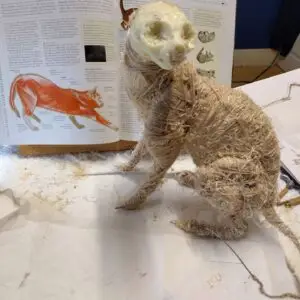
Perhaps you would like to take some time to think before committing to pet taxidermy, or you may simply be curious about how the process works. Either way, I am here to provide a brief and transparent explanation.
As you might expect, everything begins with the specimen. The animal should be recently deceased and ideally frozen within the first twenty-four hours of passing, or sooner in a warm environment. People often imagine the procedure to be graphic or unpleasant, but in reality it is a controlled, clean and methodical process. Only the skin is required. Using a scalpel, very light cuts are made only to skin depth and the pelt is carefully removed, much like taking off a coat. Techniques vary between taxidermists, and my approach depends on the intended pose and which areas will be most visible. As a general rule, I make incisions along the belly and the backs of the legs so that any stitching remains discreet.
Once removed, the skin is cleaned and any remaining fat is carefully trimmed away. If you have ever sat on a leather sofa or worn a leather or fur jacket, you already understand the end result we are aiming for, with the only difference being that the fur remains attached on one side.
The skin is then placed into a pickle solution. This begins the tanning process, tightening the fibres and securing the fur. It remains in this solution for a period that can range from a few weeks to several months. After this stage, the pelt is refined further to ensure it is thin, clean and free from any remaining fat or grease. It is then washed and treated with a professional tanning solution, which prevents decomposition and prepares the skin for the next stages of mounting.
Building the Form for Taxidermy
Inside every piece of taxidermy is a form that supports the skin and represents the animal’s natural shape, size and intended pose. There are several ways to create this structure, and each taxidermist has their own preferred techniques. Some choose to buy commercial mannikins, which are pre-made foam forms with internal wire. These can be useful, but they are produced in fixed sizes, and animals, like people, rarely conform to standard proportions. Because pets vary so uniquely in shape and expression, I rarely use pre-made mannikins for companion animals and instead build custom forms.
To create these bespoke forms, I use one of two methods. The choice depends on the species, the chosen pose and the character I am trying to capture, and occasionally on the creative direction I feel inspired by that day.
Method One: Traditional Woodwool Forming
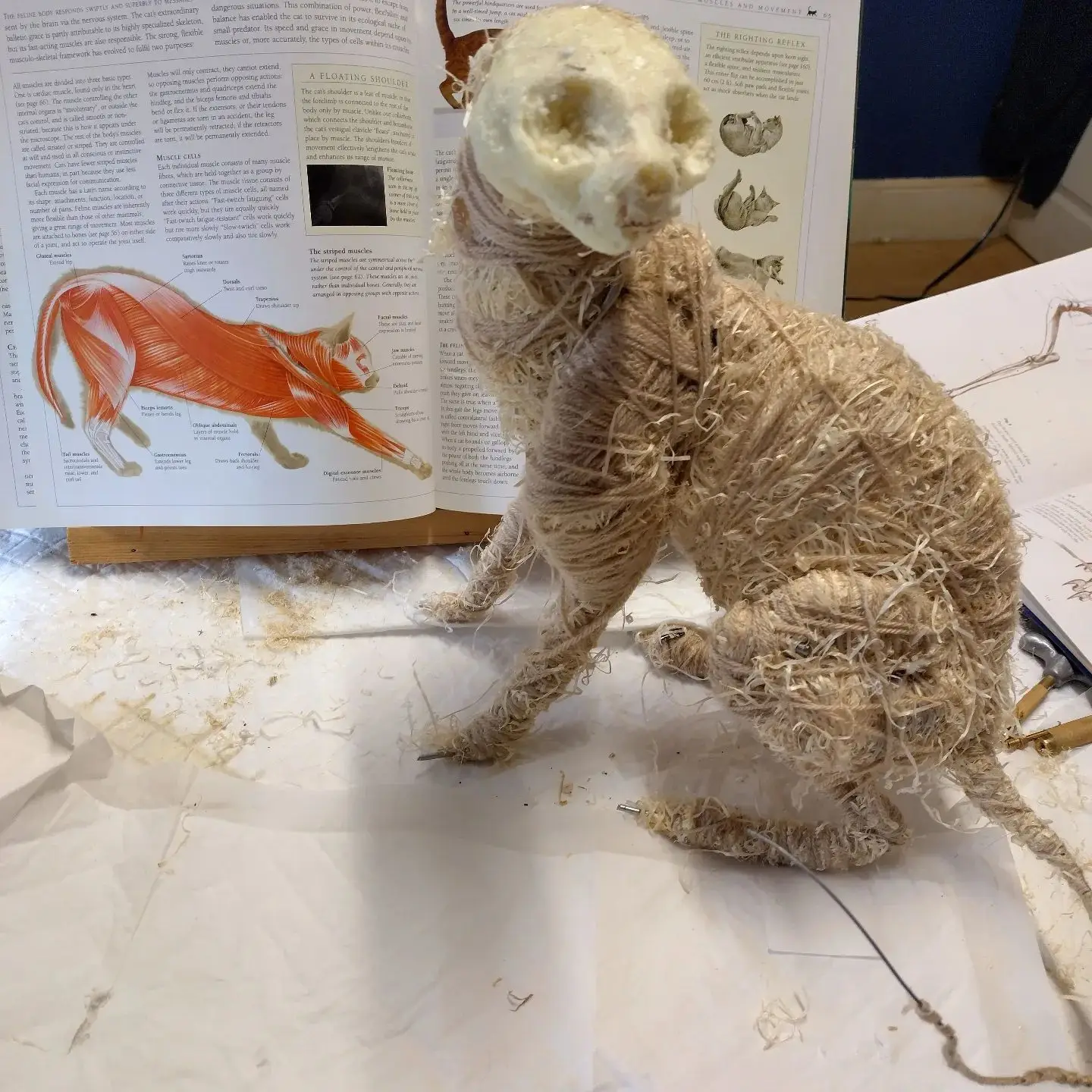
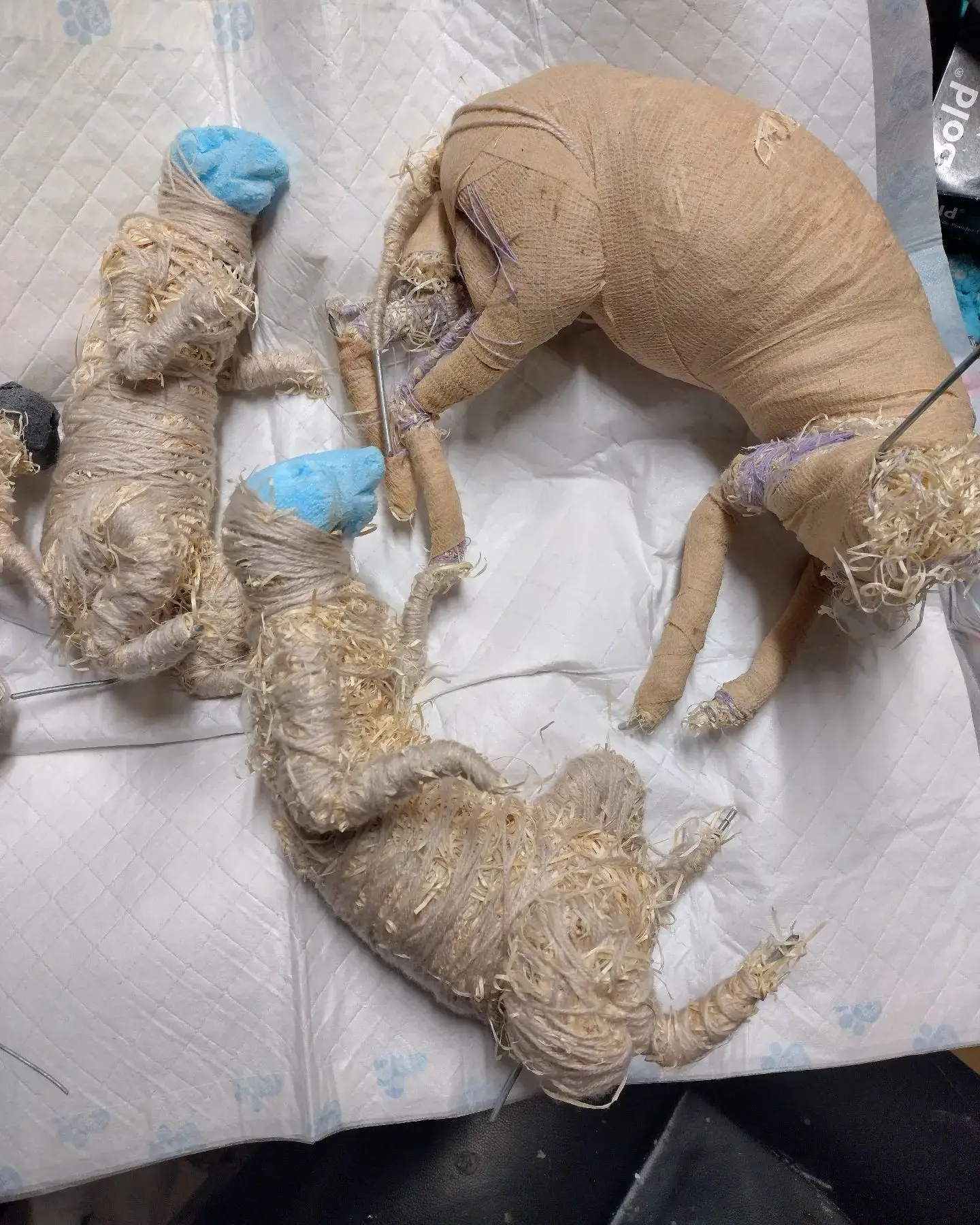
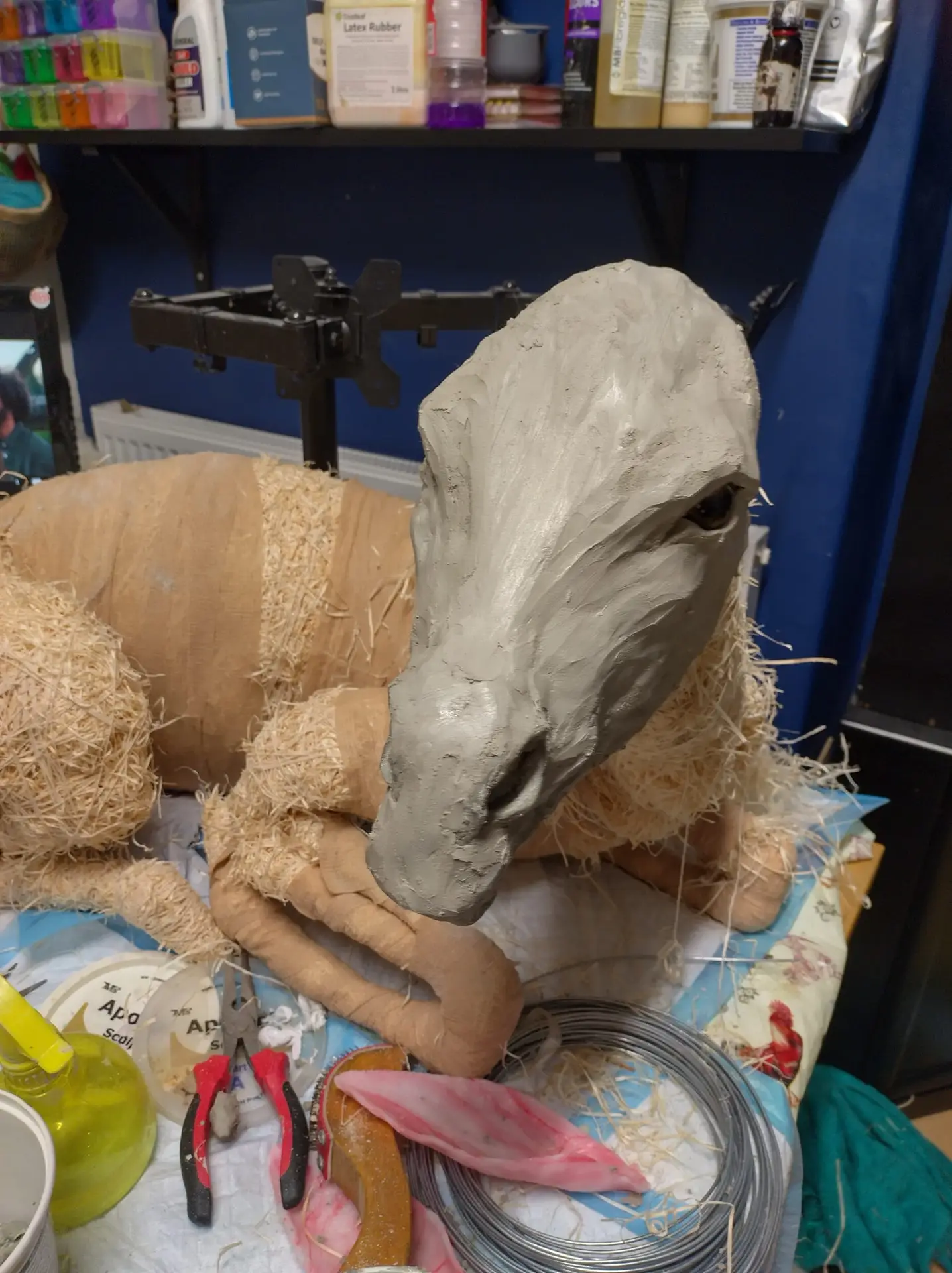
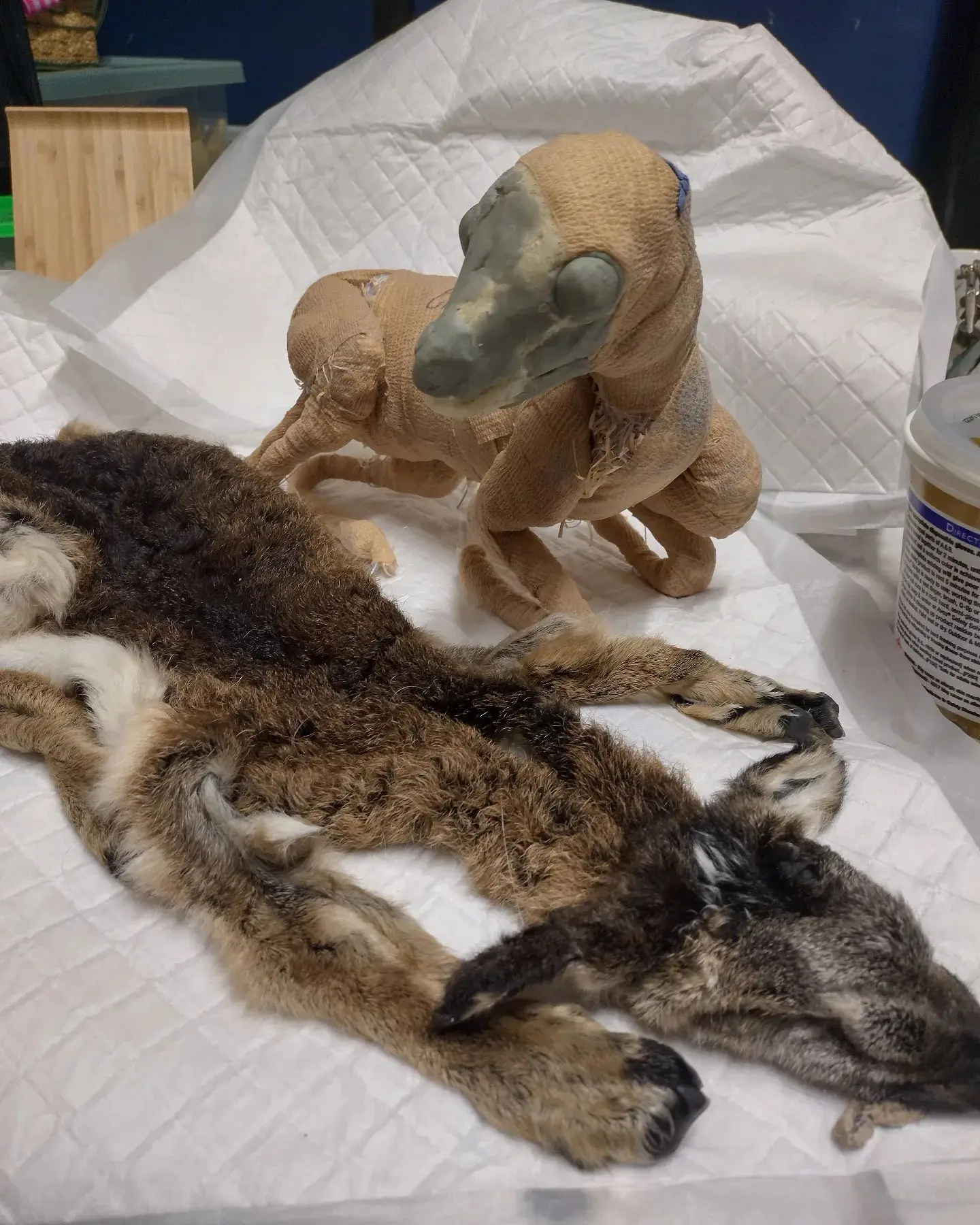
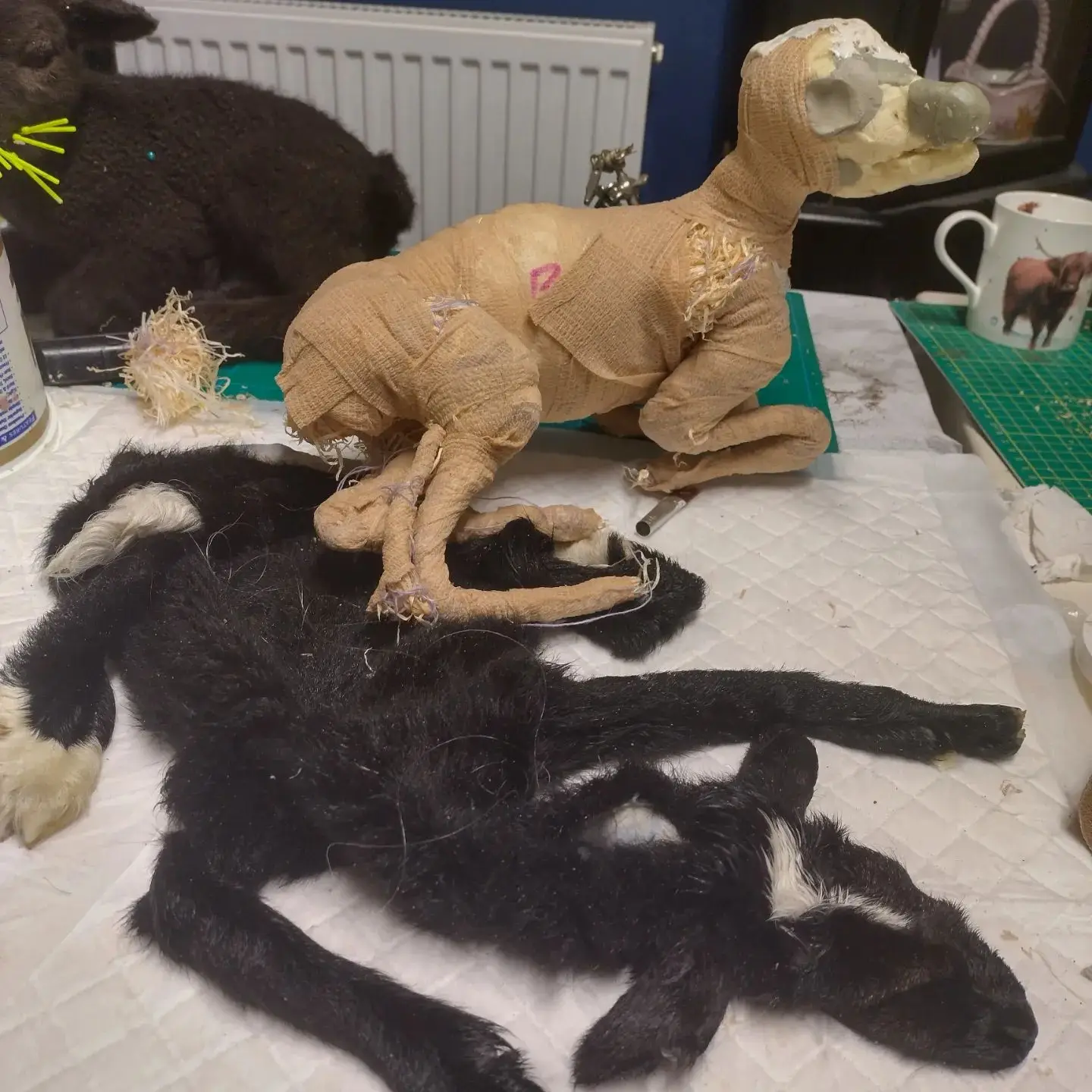
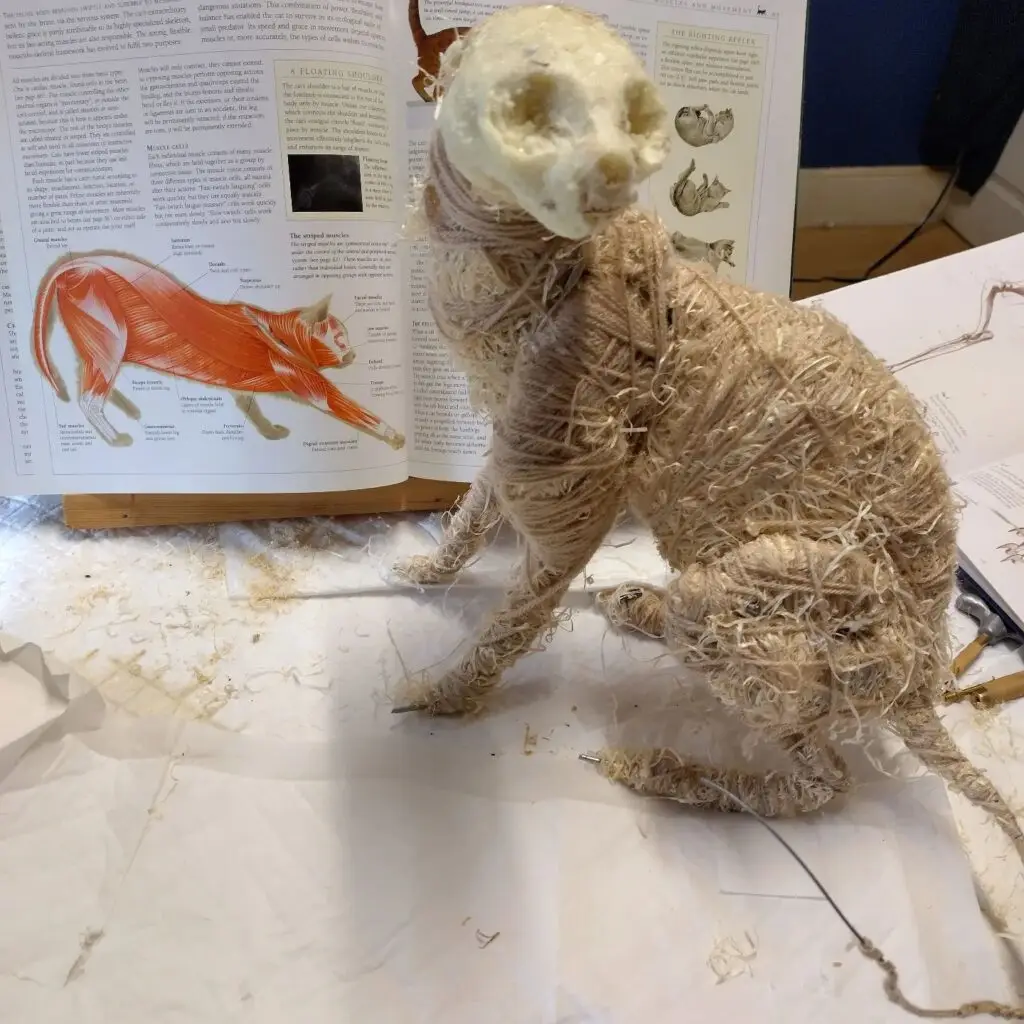
This is the method I most enjoy. A wire armature is shaped to match the animal’s proportions and desired pose. Woodwool (the same natural shredded material often found in gift hampers and packaging) is then wrapped around the wire frame and tightly bound with twine or wool. This enables me to sculpt and refine the body, building and adjusting the form layer by layer until the anatomy looks correct and lifelike. Some animals require multiple wire “bones” and joints to accurately replicate their structure.
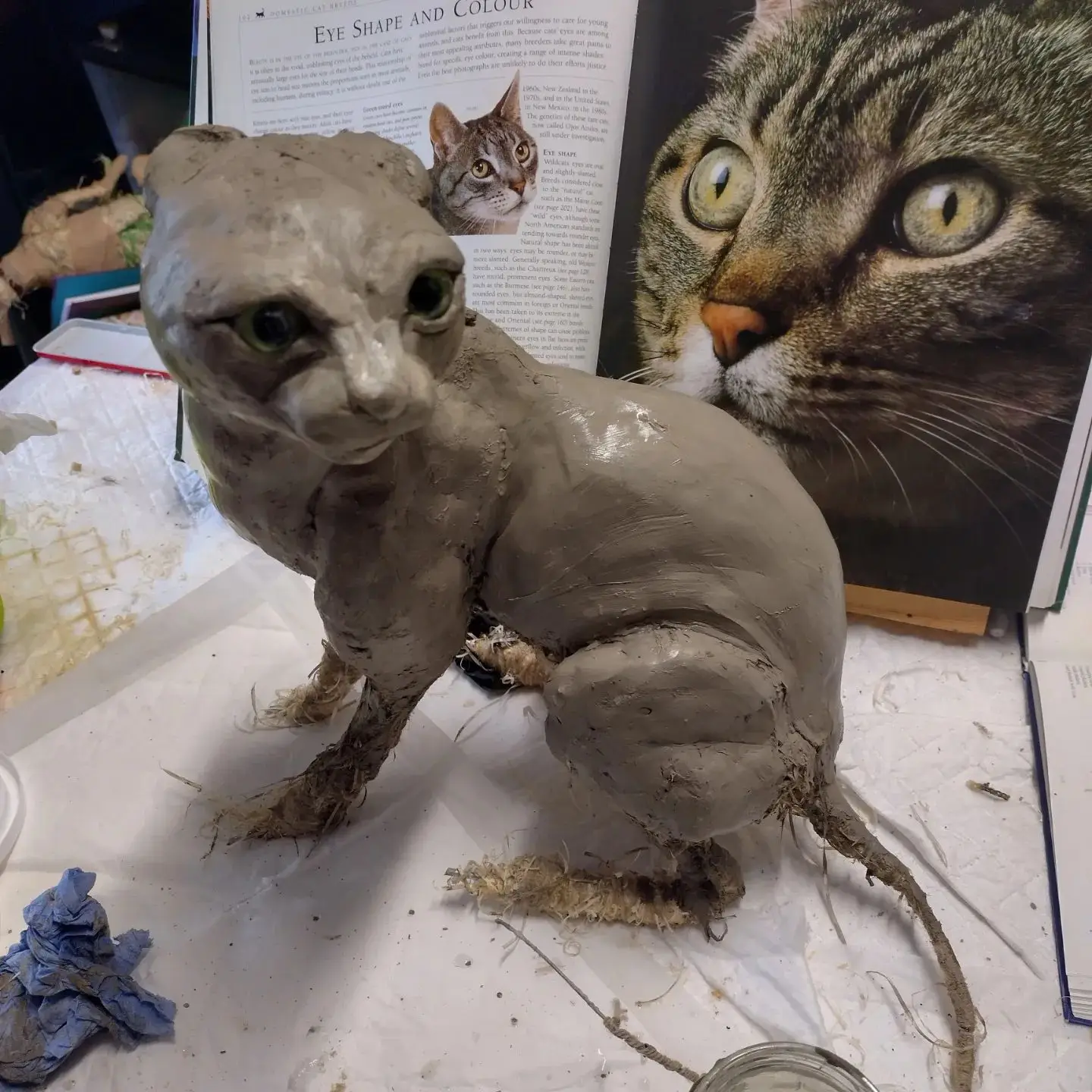
Once the body is shaped, I take a mould of the real skull and cast a lightweight replica in resin or foam, which is then attached to the form. Bandages, plaster and other sculpting materials may be used to refine the surface and add muscle definition, depending on the breed or species.
Method Two: Casting and Foam Moulding
For certain animals, particularly larger specimens, short-coated breeds, or those with highly detailed muscle definition, I use a casting method. The carcass is moulded in plaster, which is then used to create a foam and wire form. The structure is refined with clay or plaster to achieve accurate muscle shape and posture. This approach provides strong support for poses where stability is essential, such as standing mounts.